Day 1 - Mehendi
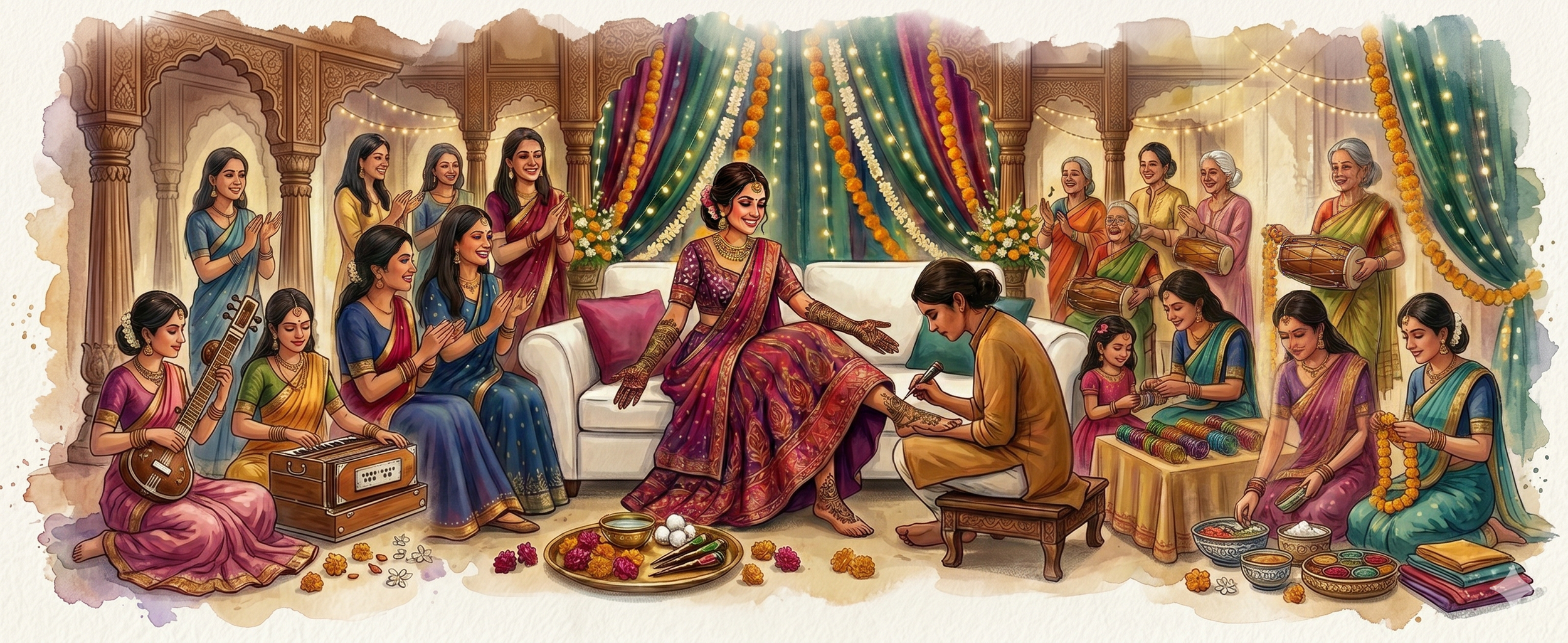
The Mehendi night is one of the most vibrant, festive, and joyous events leading up to the wedding, bringing family and friends together for an evening filled with music, dance, and the ritual application of intricate henna designs. Beyond its stunning visual artistry, the bridal mehendi carries deep cultural symbolism and visual blessings for the couple's new beginning; the lotus flowers and peacocks woven into the patterns represent purity, beauty, and prosperity, while tradition holds that the deeper and darker the resulting stain, the stronger the love and bond will be between the newlyweds. To add a touch of playfulness to this beautiful tapestry of good fortune, the groom's initials are traditionally hidden within the maze of the bride's design, creating a lighthearted hunt on the wedding night that symbolizes the joy and partnership of their future together. It is also said that if the groom can find his name, the couple will always find their way to each other.
Day 2 - Maticore / Dig Dutty
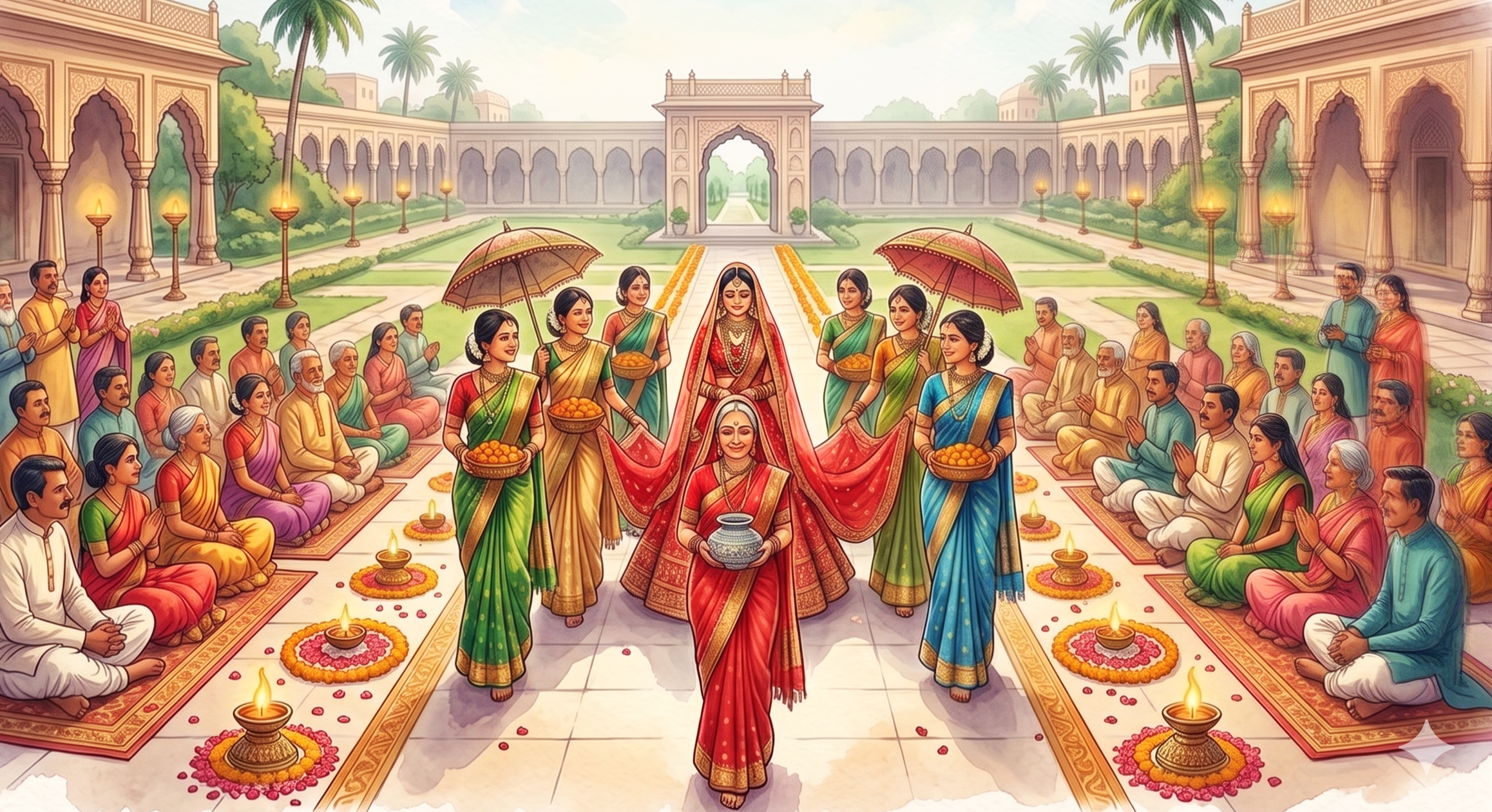
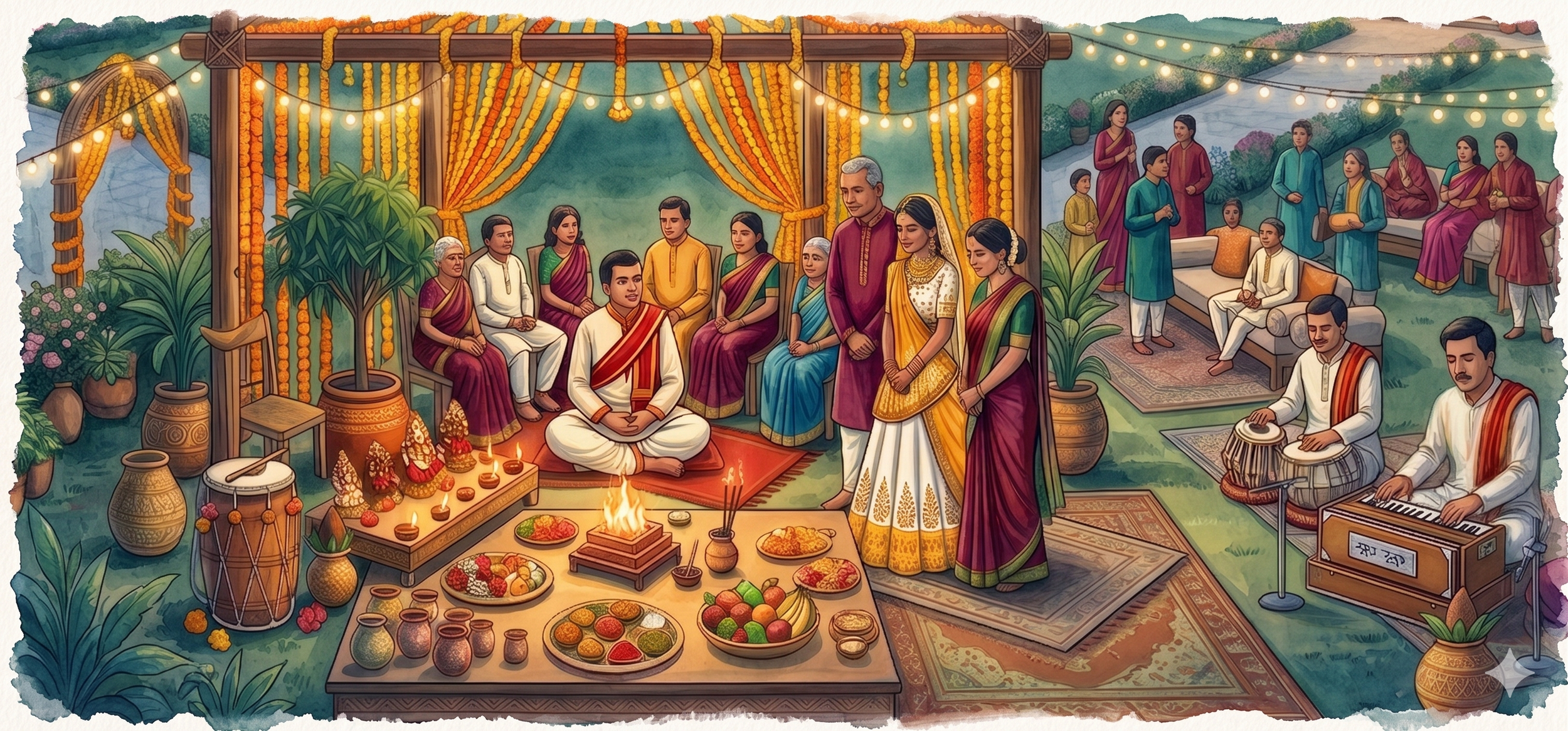
The Maticore (Ma-T-core) is a deeply spiritual, Guyanese Hindu tradition that takes place a couple of days before the wedding (also done in other parts of the Caribbean), traditionally paired with the Haldi (dyeing) ceremony to purify and prepare the couple for marriage. Rooted in ancestral traditions carried from India to Guyana, this women-led pre-wedding ritual is held separately at the bride's and groom's family homes, where a procession of women journeys to a nearby body of water to "dig the earth" and collect fresh soil. This sacred earth is brought back to the home to build a small altar, symbolizing fertility, the grounding blessing of Mother Earth (Dharti Mata), and the solid foundation of the couple's new life together. Following these prayers, the festive energy shifts into the Haldi ceremony, where family and friends apply a bright yellow paste made of turmeric, oil, and water to the bride or groom. This ritual not only serves as an ancient, skin-glowing beauty treatment but also as a protective blessing meant to ward off evil spirits, bring immense good fortune, and radiate the joy of the upcoming union.
Day 3 - Wedding Day
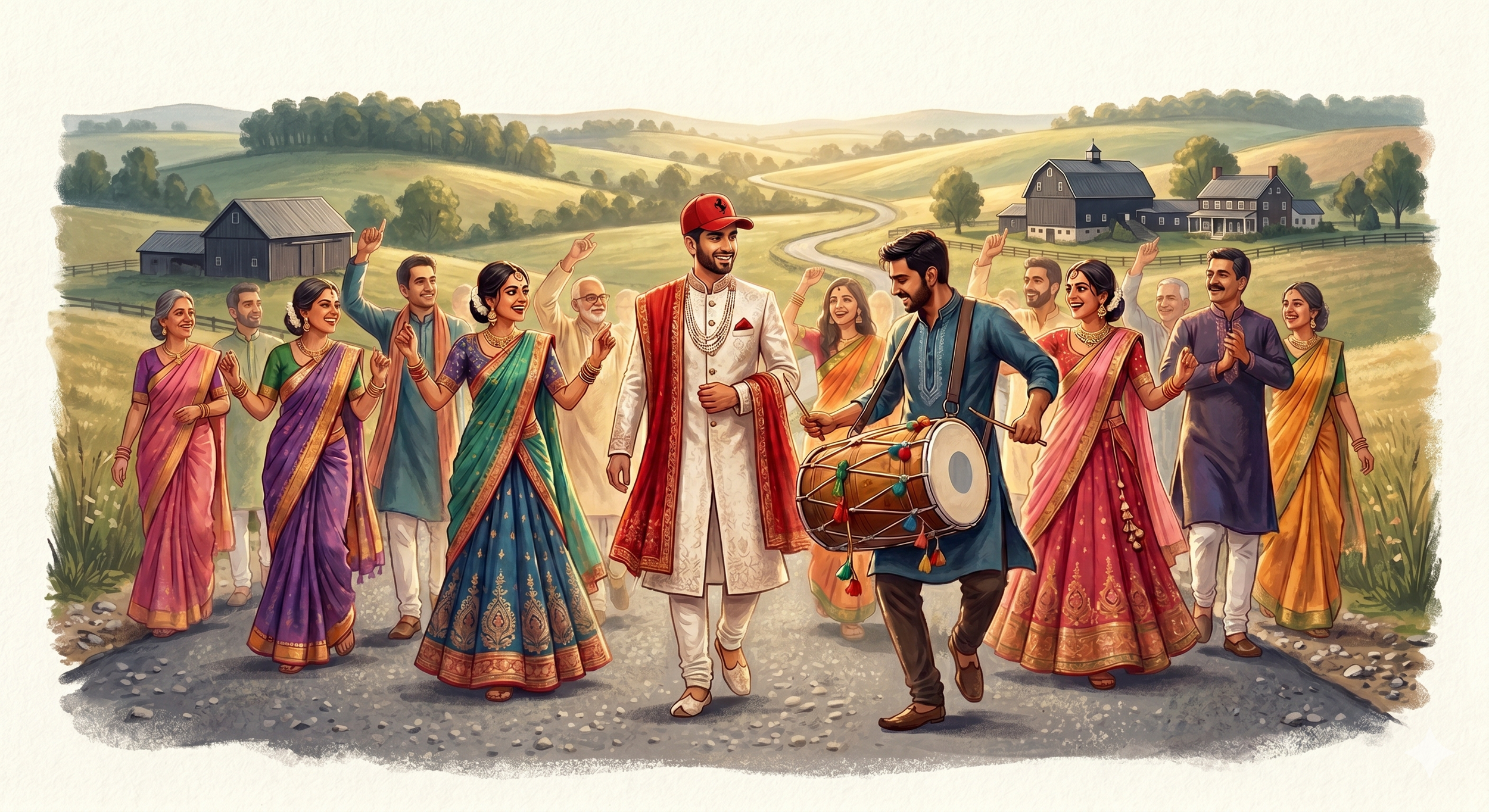
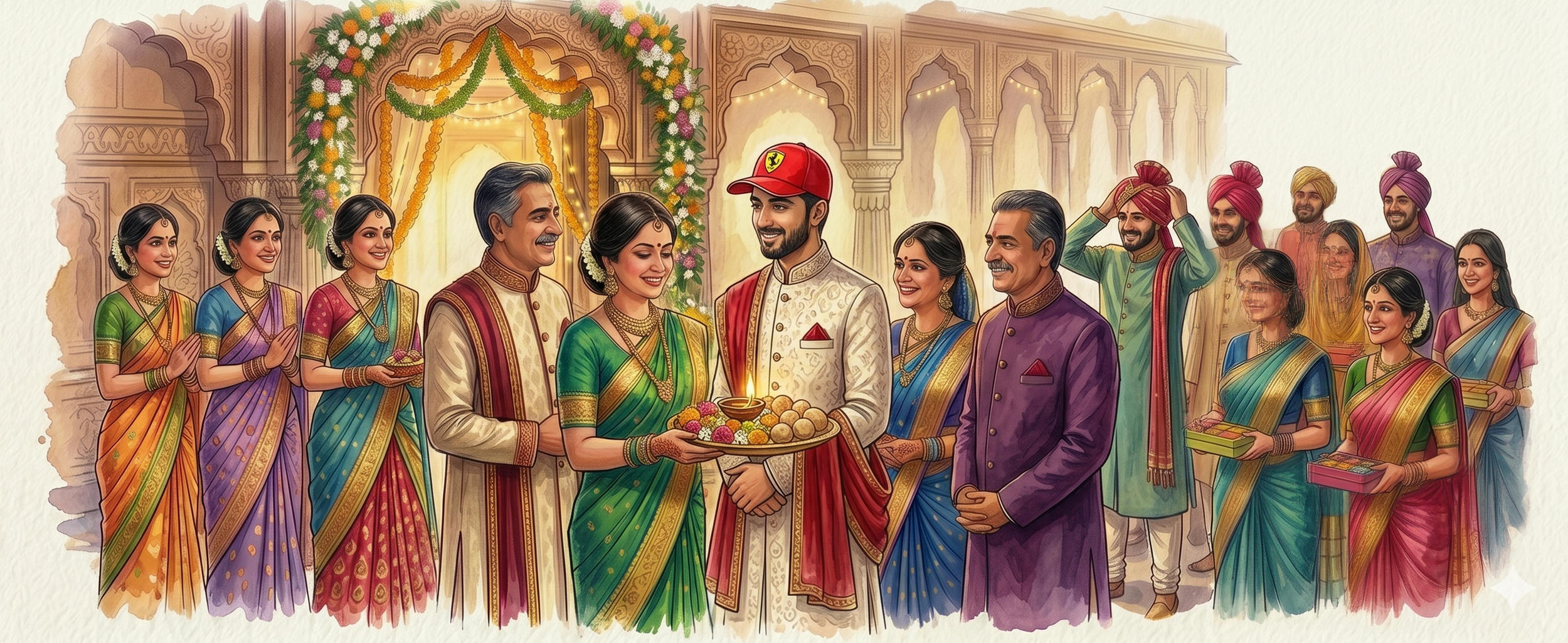
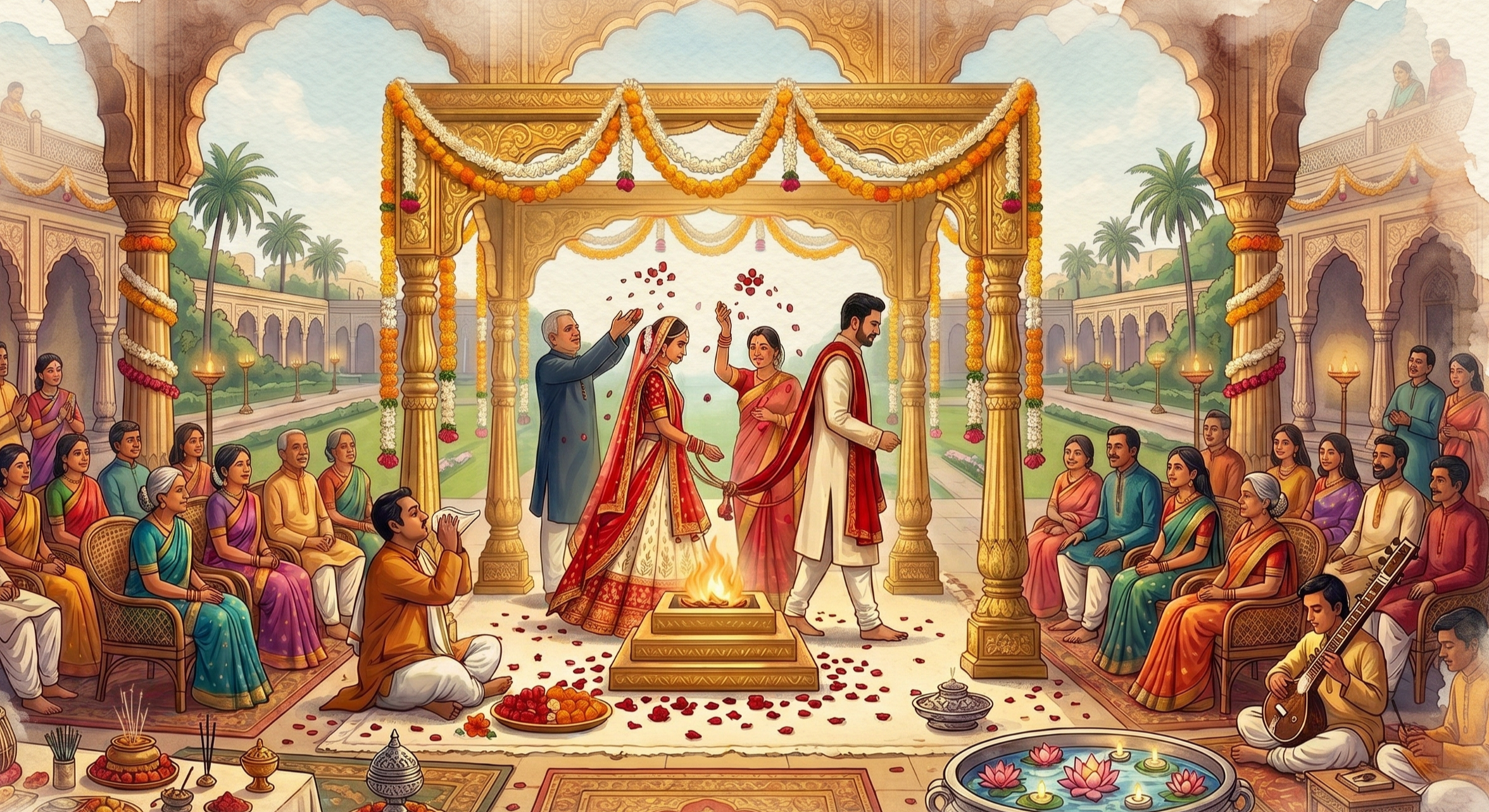
The Hindu wedding ceremony is a sacred, time-honored union that beautifully signifies not just the joining of two individuals, but the profound merging of two entire families. Rich in ancient Vedic symbolism, the ceremony begins with the Milni and Vaar Puja, where the bride’s family warmly welcomes the groom, honoring him and officially blending the two households. At the heart of the mandap, deep commitments are forged through pivotal steps like the Kanyadaan, a deeply emotional moment where the bride’s parents entrust her hand to the groom, symbolizing ultimate trust and family blessing. Together, the couple walks around the holy fire (Agni Pradakshina) to witness their vows before the divine, culminating in the Saptapadi, where they take seven sacred steps together—traditionally oriented toward the sun—each step representing a shared promise of nourishment, strength, and lifelong companionship. The pinnacle of these marital vows is sealed when the groom places the Mangalsutra (a sacred black and gold beaded necklace) around the bride's neck and applies Sindoor (vermilion powder) along the parting of her hair, powerful symbols of love, protection, and her new status as a married woman whose life is now beautifully intertwined with his.